
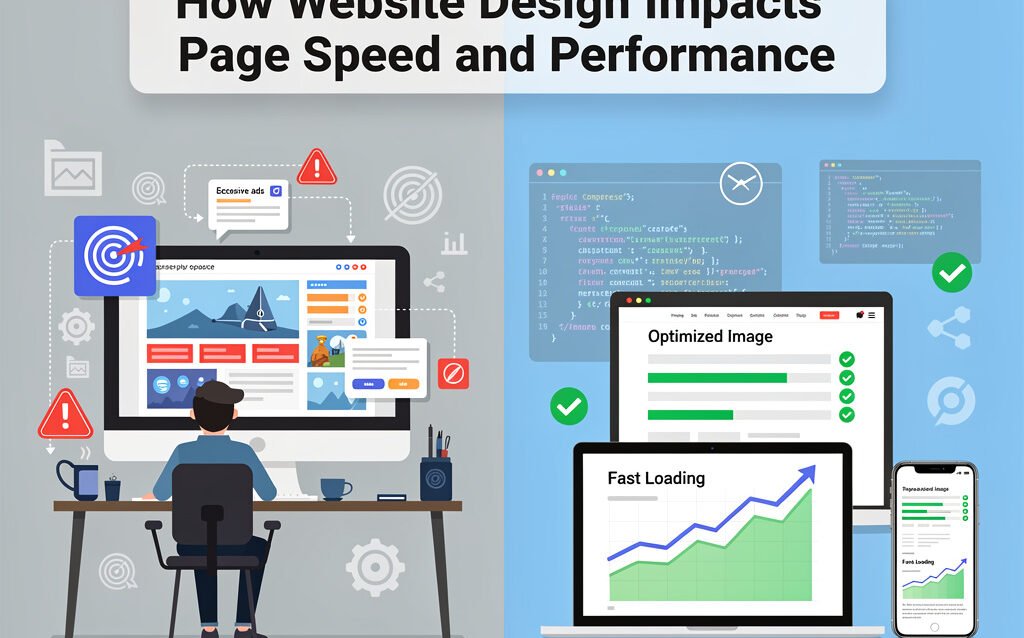
If your website looks beautiful but loads slowly, you are losing business.
In competitive markets like Dubai and across the United Arab Emirates, users expect fast, seamless digital experiences. A delay of even 2–3 seconds can drastically reduce engagement, conversions, and search rankings.
Website design is not just about visuals.
It directly impacts page speed, user experience, SEO performance, and revenue.
At Infowaves, we engineer WordPress websites that are visually premium and technically optimized for performance.
Why Page Speed Matters More Than Ever
Page speed affects:
- Google rankings
- Conversion rates
- Bounce rate
- Ad performance scores
- Brand perception
Google prioritizes fast websites because they improve user experience. If your website loads slowly, search engines push it down—even if your content is strong.
For UAE businesses targeting high-value corporate clients, speed equals credibility.
1. Heavy Design Elements Slow Down Websites
Many websites use:
- Large uncompressed images
- Background videos
- Excessive animations
- Complex sliders
- High-resolution banners
While these look impressive, they increase load time significantly.
The Fix
- Use compressed, optimized images (WebP format)
- Replace heavy sliders with static hero sections
- Limit animation scripts
- Use lazy loading for images
Design should enhance performance—not damage it.
2. Poor Theme Selection Impacts Performance
Not all WordPress themes are built equally.
Some themes include
- Excessive built-in scripts
- Unused features
- Large CSS files
- Heavy page builders
This creates code bloat, which slows your website down.
At Infowaves, we:
- Use lightweight, performance-focused themes
- Remove unnecessary scripts
- Minify CSS and JavaScript
- Optimize theme architecture
A clean design foundation leads to faster loading times.
3. Too Many Plugins Reduce Speed
Plugins add functionality—but too many plugins slow performance.
Common issues:
- Multiple plugins doing the same job
- Poorly coded plugins
- Outdated plugins
- Heavy visual builders
Smart Design Strategy
- Use only essential plugins
- Replace plugin functions with custom code when possible
- Regularly audit plugin performance
Minimalist design leads to maximum speed.
4. Mobile-First Design Improves Core Web Vitals
Over 70% of UAE users browse via mobile.
If your design:
- Isn’t responsive
- Has oversized elements
- Uses large fonts without scaling
- Has unoptimized images
Your Core Web Vitals score drops.
Google measures:
- Largest Contentful Paint (LCP)
- First Input Delay (FID)
- Cumulative Layout Shift (CLS)
A performance-focused website design improves all three metrics.
5. Hosting and Design Must Work Together
Even the best design cannot perform on poor hosting.
Performance depends on:
- Server speed
- CDN configuration
- Caching setup
- Database optimization
At Infowaves, we ensure:
- Proper hosting selection
- CDN integration
- Advanced caching configuration
- Image delivery optimization
Design and hosting must be aligned.
6. Clean UI Improves User Performance
Speed is not only technical—it’s psychological.
Cluttered websites:
- Confuse users
- Increase bounce rate
- Reduce engagement
Clean, structured design:
- Improves navigation
- Reduces unnecessary page reloads
- Guides users toward conversion
Better structure leads to faster decisions.
7. Checkout and Form Design Impacts Performance
For e-commerce and lead generation websites:
Slow forms and heavy checkout pages reduce conversions.
Optimized design:
- Reduces unnecessary fields
- Uses lightweight form scripts
- Enables auto-fill
- Avoids redirect chains
Even a one-second improvement can increase conversions by 7–10%.
Real Example: Before and After Optimization
Corporate Website – Dubai
Before:
- Page load time: 5.8 seconds
- High bounce rate
- Poor Google ranking
After performance redesign:
- Page load time: 1.9 seconds
- 42% lower bounce rate
- Improved SEO ranking
- 60% increase in lead submissions
Speed transforms business results.
How Infowaves Designs High-Performance WordPress Websites
We follow a structured process.
1. Performance Audit
- Page speed testing
- Core Web Vitals analysis
- Plugin audit
- Code review
2. Lightweight Design Implementation
- Clean UI
- Minimal scripts
- Optimized media
- Structured layout
3. Technical Optimization
- Caching setup
- CDN configuration
- Image compression
- Database cleanup
4. Continuous Monitoring
- Monthly speed checks
- Performance reports
- Ongoing improvements
We don’t just design websites.
We engineer digital performance systems.
Frequently Asked Questions
How fast should a website load in 2026?
Under 3 seconds ideally. Premium sites aim for under 2 seconds.
Does design affect SEO?
Yes. Slow design lowers rankings, increases bounce rate, and reduces crawl efficiency.
Are animations bad for speed?
Not always. But excessive animation scripts slow performance.
Is WordPress slow?
No. Poor design and bad hosting make WordPress slow—not the platform itself.
Final Thoughts
Website design directly impacts:
- Speed
- SEO
- Conversions
- Brand perception
- Revenue
In a high-competition market like Dubai, performance is a competitive advantage.
If your website is slow, you are silently losing customers.
Infowaves builds high-performance, SEO-driven, and conversion-focused WordPress websites for businesses across the UAE.