

Why Every UAE Business Needs a Website Audit
Your website is often the first interaction potential customers have with your business. Whether you’re a startup in Dubai, a retail business in Abu Dhabi, or an established enterprise serving clients across the UAE, your website should consistently deliver a fast, secure, and user-friendly experience.
However, many businesses invest in building a professional website but rarely evaluate its performance after launch. Over time, websites develop technical issues, outdated content, broken links, slow-loading pages, and SEO errors that negatively impact search rankings and lead generation.
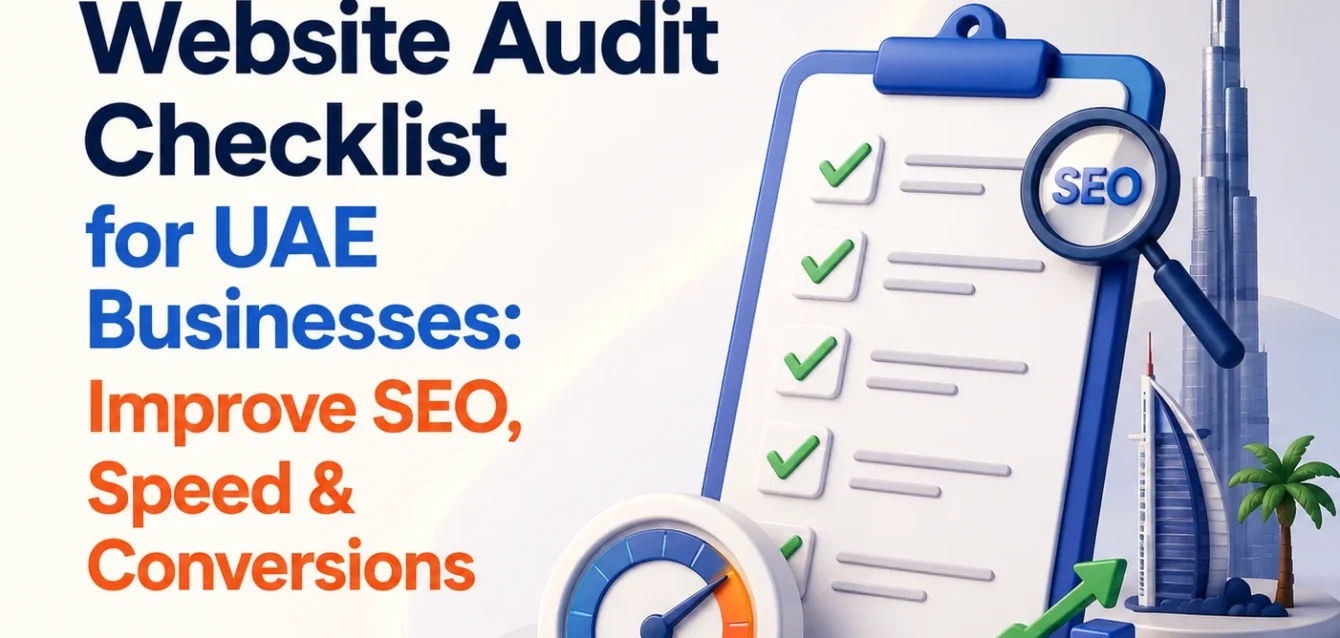
A website audit helps uncover these hidden issues before they affect your business. It provides a complete health check of your website, allowing you to improve search visibility, enhance user experience, and increase conversions.
Let’s explore the essential website audit checklist every UAE business should follow.
1. Check Website Speed and Performance
Website speed is one of the most important ranking factors for search engines and a major contributor to user experience.
Slow-loading websites increase bounce rates and reduce customer engagement. Even a few extra seconds of loading time can result in lost sales and inquiries.
During your audit, evaluate:
- Page loading speed
- Image optimization
- Browser caching
- JavaScript and CSS optimization
- Server response time
- Core Web Vitals
Improving website speed not only helps SEO but also creates a smoother browsing experience that encourages visitors to stay longer and take action.
2. Review Technical SEO Health
Technical SEO forms the foundation of a high-performing website. Without it, even excellent content may struggle to rank on search engines.
Your technical SEO audit should include:
- XML sitemap validation
- Robots.txt configuration
- Canonical tags
- HTTPS security
- Broken pages (404 errors)
- Redirect chains
- Duplicate content
- Crawl errors
- URL structure
Fixing technical issues ensures search engines can crawl and index your website efficiently.
3. Evaluate On-Page SEO
Each page should be optimized to target a specific search intent.
Review the following elements:
- SEO-friendly page titles
- Meta descriptions
- Header hierarchy (H1, H2, H3)
- Image alt text
- Internal linking
- Keyword placement
- Content readability
- URL optimization
Every page should provide valuable information while naturally incorporating relevant keywords that reflect your services and audience.
4. Test Mobile Responsiveness
Most users in the UAE browse websites using smartphones. If your website isn’t fully optimized for mobile devices, you’re likely losing valuable business opportunities.
Check whether your website:
- Adapts to different screen sizes
- Has clickable buttons
- Displays readable text
- Loads quickly on mobile networks
- Maintains proper navigation
A responsive website improves customer experience and supports higher search engine rankings.
5. Review Website Security
Security is essential for protecting both your business and your customers.
A security audit should include:
- SSL certificate status
- Software updates
- Plugin updates
- Theme updates
- Malware scans
- Strong administrator passwords
- Firewall configuration
- Backup systems
A secure website builds trust while reducing the risk of cyberattacks and data loss.
6. Analyze User Experience (UX)
Visitors should be able to find information quickly and navigate your website effortlessly.
Review:
- Navigation structure
- Menu organization
- Contact forms
- Calls-to-action
- Readability
- Page layout
- Visual consistency
A well-designed user experience encourages visitors to explore more pages and increases the likelihood of generating inquiries or sales.
7. Audit Content Quality
Content plays a crucial role in attracting visitors and establishing authority.
Review every page for:
- Outdated information
- Duplicate content
- Thin content
- Grammar errors
- Broken images
- Missing FAQs
- Keyword relevance
Regularly updating content demonstrates expertise and helps improve search visibility over time.
8. Check Conversion Opportunities
A website should not only attract visitors but also convert them into customers.
Review whether your website includes:
- Clear contact buttons
- Quote request forms
- Phone number visibility
- WhatsApp integration
- Strong call-to-action sections
- Testimonials
- Client logos
- Case studies
Removing friction from the customer journey increases conversion rates significantly.
9. Monitor Internal and External Links
Links improve navigation and strengthen your website’s SEO.
Check for:
- Broken internal links
- Broken external links
- Orphan pages
- Proper anchor text
- Relevant internal linking between service pages and blogs
A strong internal linking strategy helps search engines understand your website structure while guiding visitors to relevant content.
10. Review Analytics and User Behaviour
Your website data reveals how visitors interact with your business online.
Monitor:
- Organic traffic
- Bounce rate
- Average engagement time
- Conversion rate
- Top-performing pages
- Exit pages
- Device usage
- Traffic sources
Regular analysis helps identify opportunities for continuous improvement.
Common Website Audit Mistakes Businesses Make
Many businesses unknowingly overlook important issues, including:
- Ignoring technical SEO
- Publishing duplicate content
- Allowing outdated plugins to remain active
- Forgetting to update service pages
- Neglecting mobile optimization
- Failing to monitor Core Web Vitals
- Using weak calls-to-action
- Not tracking conversions
Avoiding these mistakes helps maintain a healthy, high-performing website.
How Often Should You Perform a Website Audit?
The frequency of website audits depends on how often your website changes.
A good practice is to:
- Review website performance monthly.
- Perform a complete SEO audit every quarter.
- Conduct a technical audit after major website updates.
- Monitor security and backups weekly.
- Update content regularly to keep information accurate and relevant.
Routine audits help identify issues early before they affect rankings or customer experience.
Benefits of Regular Website Audits
Businesses that perform regular website audits often experience:
- Better Google rankings
- Faster page loading speeds
- Higher conversion rates
- Improved user experience
- Stronger website security
- Better mobile performance
- Increased customer trust
- Higher return on digital marketing investment
Website audits are not a one-time activity—they are an ongoing process that supports long-term online growth.
Ready to Elevate Your Results?
A successful website requires more than attractive design. It needs strong technical SEO, excellent performance, robust security, and a user-friendly experience that converts visitors into customers. Regular website audits help identify opportunities for improvement while ensuring your business remains competitive in the UAE’s fast-growing digital landscape.
At Infowaves, we conduct comprehensive website audits that go beyond basic SEO checks. Our experts analyze your website’s performance, technical health, user experience, security, and conversion potential to deliver practical recommendations that drive measurable results. Whether you want to improve search rankings, increase leads, or optimize website performance, our team provides tailored solutions designed for long-term success.
Partner with Infowaves today and let us transform your website into a high-performing digital asset that supports your business growth across Dubai and the UAE.