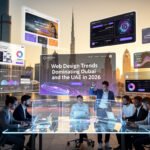

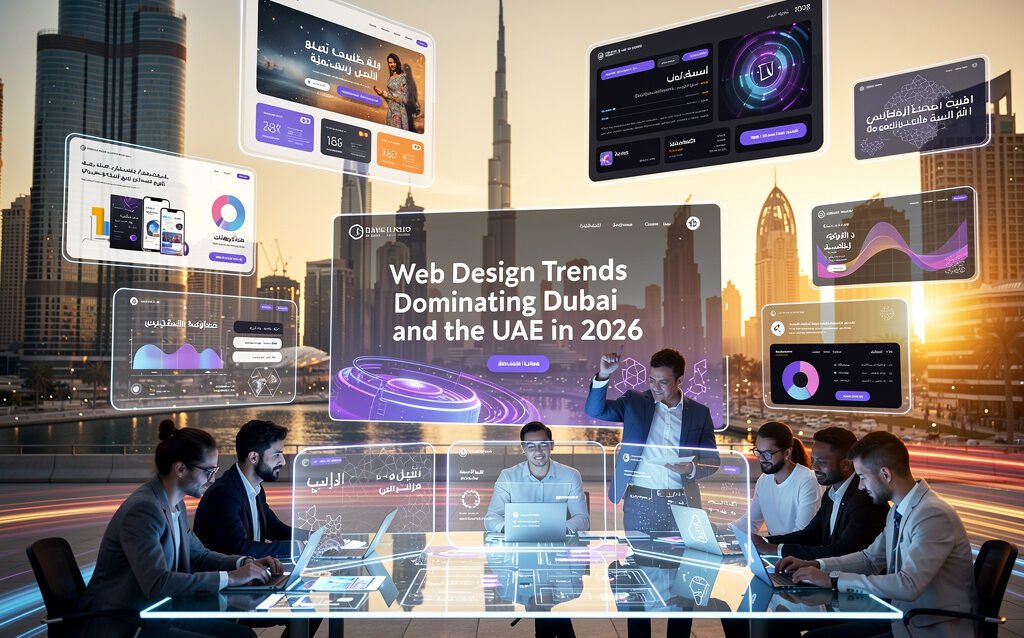
In 2026, your website is no longer just a digital brochure. It is an interactive experience, a trust signal, a marketing machine, and, in most industries, the single most important touchpoint in a customer’s decision-making journey. The web design trends shaping the UAE market this year all point toward the same conclusion — design that does not serve a clear business outcome is just expensive decoration.
Dubai’s consumers encounter world-class digital experiences every day. The benchmark they measure your website against is set by global luxury brands, international banks, and leading hospitality groups—many of whom operate right here in the UAE. For local businesses, that means the standard is genuinely high. Here is what is shaping web design in Dubai and across the Emirates in 2026.
AI-Powered Personalization at Scale
The most significant shift in web design for Dubai businesses this year is the integration of artificial intelligence to deliver personalized experiences at scale. Websites that dynamically adapt their content, product recommendations, calls to action, and layout based on individual user behavior are consistently converting at 2 to 4 times the rate of their static counterparts.
For a UAE e-commerce brand, this might mean showing Arabic content to visitors from Sharjah and English content to visitors arriving from DIFC. For a real estate company, it means automatically surfacing luxury properties to high-value visitors and affordable units to first-time buyers—in real time, without any manual input. This is no longer a feature exclusive to enterprise-level businesses. In 2026, it is an accessible advantage for any UAE brand working with the right web design partner.
Bilingual UX: Arabic and English by Design, Not Afterthought
For years, many Dubai businesses treated Arabic as an addition to their English website — a translated version created more as a compliance checkbox than a genuine user experience. That approach is no longer competitive. The businesses performing best online across the UAE are those whose Arabic and English experiences are designed in parallel from day one, with right-to-left layouts built into the design system, culturally appropriate typography and imagery for each language, and separate SEO structures built specifically for Arabic keyword performance in Google.
The Arabic-speaking digital market across the UAE and the wider GCC is large, growing fast, and still significantly underserved by quality web experiences. Businesses that invest in genuine bilingual design in 2026 are entering a competitive space that most of their rivals have not yet taken seriously.
Core Web Vitals as a Design Standard
Google’s Core Web Vitals — the technical performance metrics measuring loading speed, visual stability, and responsiveness — are direct ranking factors in 2026. A visually impressive website that performs poorly on these metrics will be outranked by a plainer website that passes them. The most professional web design companies in Dubai treat these benchmarks as design requirements rather than technical afterthoughts, building speed, stability, and responsiveness into every decision from the earliest stages of a project.
Micro-Interactions That Build Confidence
The gap between a website user’s trust and one they quietly abandon is often made up of micro-interactions—the subtle animations, hover responses, loading behaviors, and feedback signals that communicate care and quality without announcing themselves. In Dubai’s market, where consumers are accustomed to premium experiences across every industry, these details carry significant weight in how people perceive your brand.
The important distinction is purpose. Every micro-interaction should communicate something — confirming an action, directing attention, or reinforcing your brand’s character. Motion that exists purely as decoration creates distraction. Motion with intention creates confidence.
Scroll-Triggered Storytelling
Progressive reveal design—where content, imagery, and narrative unfold as the user scrolls—has become the dominant approach in Dubai’s most competitive industries, particularly real estate, hospitality, and luxury retail. Rather than presenting everything simultaneously, scroll-triggered storytelling controls the pace of information, creates emotional momentum, and meaningfully increases the amount of time visitors spend engaging with your content—a signal that benefits both user experience and search rankings.
Video-First Hero Sections
Static images in website hero sections are giving way to short-form video backgrounds, cinematic loops, and video testimonials placed front and center. For Dubai’s hospitality, property, and lifestyle brands, the emotional weight of well-produced video in the first few seconds of a visit is transformative—for brand perception, for time on page, and ultimately for conversion. The critical caveat is execution. Video that is not properly optimized for web delivery can devastate page speed scores, undoing the very impression it was meant to create. This is one of the most common technical failures Infowaves encounters when auditing UAE websites.
Hyper-Local Design Signals
Across all sectors, UAE consumers respond far more warmly to websites that feel genuinely local rather than globally generic. Authentic photography of actual Dubai and UAE locations, Arabic calligraphic elements used thoughtfully in design, culturally resonant color choices, and content that references real local contexts all contribute to a sense of relevance and familiarity that stock imagery and international templates simply cannot replicate. A property website showing the actual Dubai skyline converts meaningfully better than one using photographs of a Western city. This sounds obvious—yet a surprising number of UAE business websites still get it wrong.
Accessibility as Competitive Advantage
Web accessibility — designing for users with visual, auditory, or motor impairments — is no longer solely an ethical consideration in the UAE. Digital accessibility standards are increasingly reflected in local regulations, aligning with international WCAG guidelines. Beyond the compliance dimension, accessible websites load faster, perform better in SEO, and deliver a better experience for every user regardless of ability. Forward-thinking businesses in Dubai are treating accessibility as a genuine differentiator in 2026.
Conversion Architecture as a Core Discipline
The most effective web design companies in Dubai approach every project with conversion architecture — mapping every user journey to a specific desired action, removing friction at each step, and building clear and intuitive pathways from the moment someone lands on your site to the moment they contact you or make a purchase. This is the fundamental difference between a website that impresses people and a website that measurably grows your business. At Infowaves, conversion architecture review happens before a single line of code is written on every project we take on.
Conclusion
The businesses winning in Dubai’s digital market are not always those with the biggest budgets. They are the ones working with web design partners who combine genuine aesthetic craft with strategic clarity. Is your current website keeping pace with where the market is in 2026? Visit infowaves.ae for a free website assessment and find out exactly where you stand.